


Program
Diversification and Enrichment of Agroforestry Commodities in the Setia Kawan KTH Area
Responsible Organization
Venues
Direct Funding
Period
Start
End
Target
Status
Share to :
KTH Setia Kawan Bengkulu Towards Quality Coffee Agroforestry
Coffee land management using agroforestry is a land management method implemented by the community in Air Selimang Village, Seberang Musi District, Kepahiang Regency, Bengkulu. One example is the Setia Kawan Forest Farmers Group, which has been implementing this land management method for generations. This method has proven to be more effective, utilizing a single plot of land for coffee cultivation without damaging its ecological function. Agroforestry practices maintain the woody plants beneath which coffee is grown.
Air Selimang Village is located in a mountainous area within the southern Bukit Barisan area, which serves as a protected forest. Coffee plantations managed through agroforestry have been shown to improve ecological function and economic productivity. Based on Ministerial Regulation No. 9 of 2021 concerning Social Forestry Management, the utilization of social forestry areas within protected forest areas can be carried out for coffee cultivation.
On November 10, 2009, the Kepahiang Regency Government issued Decree Number 470 of 2009 concerning the Granting of Community Forest Utilization Business Permits (IUPHKm) to farmer groups in Ujan Mas District, Kepahiang District, and Seberang Musi District, Kepahiang Regency. In this decree, 45 forest farmer groups with a total of 1.051 farmers were designated as beneficiaries of the Community Forest work area with a total area of 1.414,75 hectares. One of the groups included in this decree is the Setia Kawan Forest Farmer Group, which has 22 family heads as members and has a work area of 29 hectares.
With this legal status, forest farmer groups, including the Setia Kawan Forest Farmers Group, have received official recognition for their managed areas. This management has long been underway through agroforestry schemes, with coffee as the primary commodity, long before the designation and determination of forest area status by the state and the issuance of Community Forestry permits. This agroforestry practice has proven successful and has had a positive impact on community welfare without compromising its ecological function.
However, challenges arise because most existing coffee plants are 15–30 years old, exceeding their optimal productive lifespan of 5–20 years. As a result, current coffee production is relatively low, at only 300–500 grams per tree. Addressing this challenge requires strengthening and developing coffee agroforestry management through support for increased technical capacity in nursery management and nursery facilities.
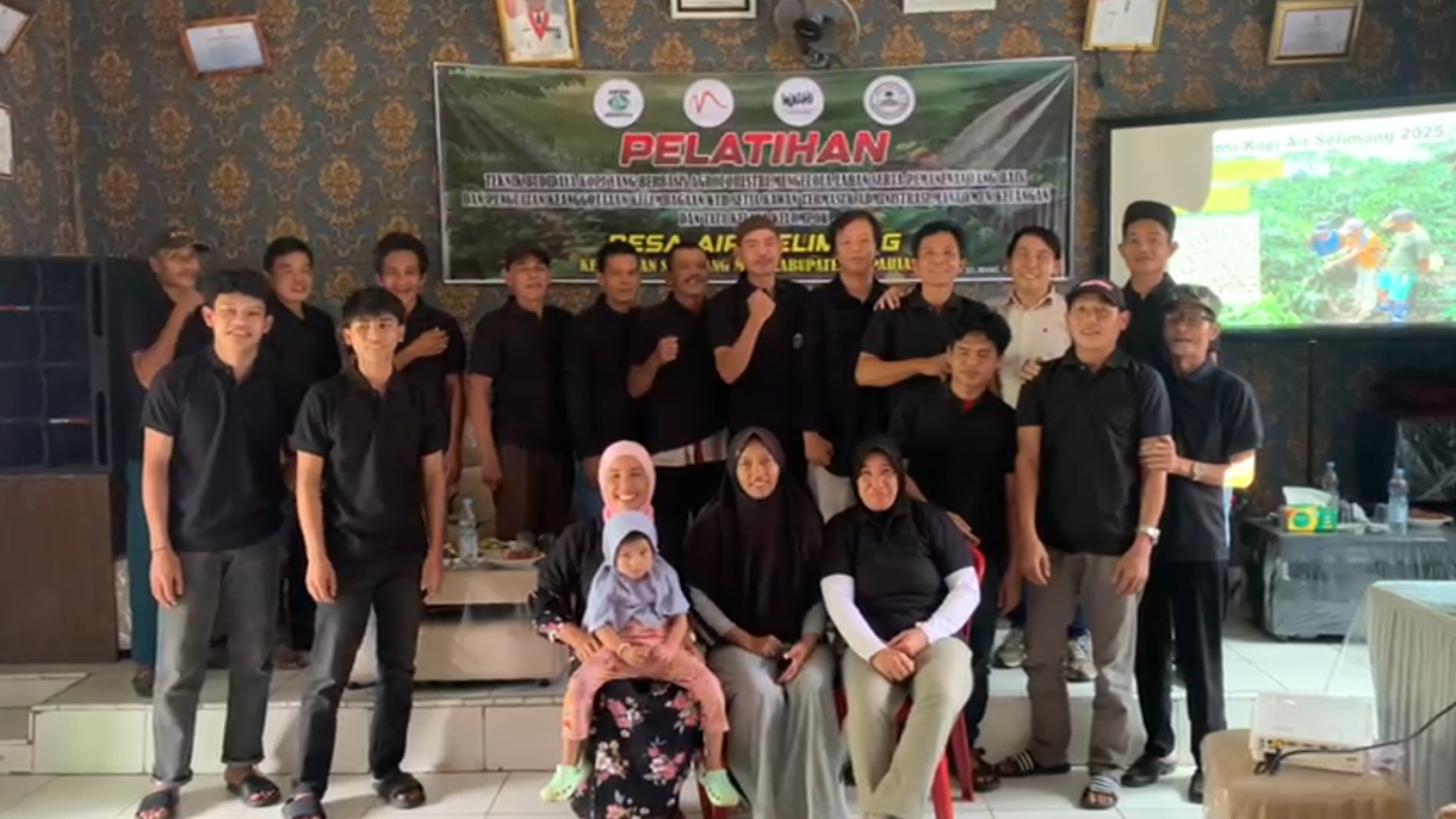
Recognizing these issues, the Setia Kawan Coffee Farming Group (KTH Setia Kawan) took the initiative to increase coffee productivity and product quality. The group strives to enhance the capacity of its members through business and institutional training aimed at improving the quality of their coffee products. This training resulted in a KTH program plan for coffee cultivation, encompassing processing, harvesting, and distribution. The training also provided insights into institutional management, including administration, financial management, and group governance.
Furthermore, to increase coffee productivity, the KTH (Cultivated Coffee Farm) took the initiative to provide food production facilities through the development of a coffee nursery through a collaborative effort. They began by sowing 4 kilograms of coffee seeds. To increase productivity, the KTH replanted coffee plants and planted woody trees. This was done to replace low-yielding coffee plants or those over 15 years old while maintaining their ecological function. They achieved this by planting 660 coffee seedlings and 214 durian seedlings.