


Investing in the true stewards of our planet
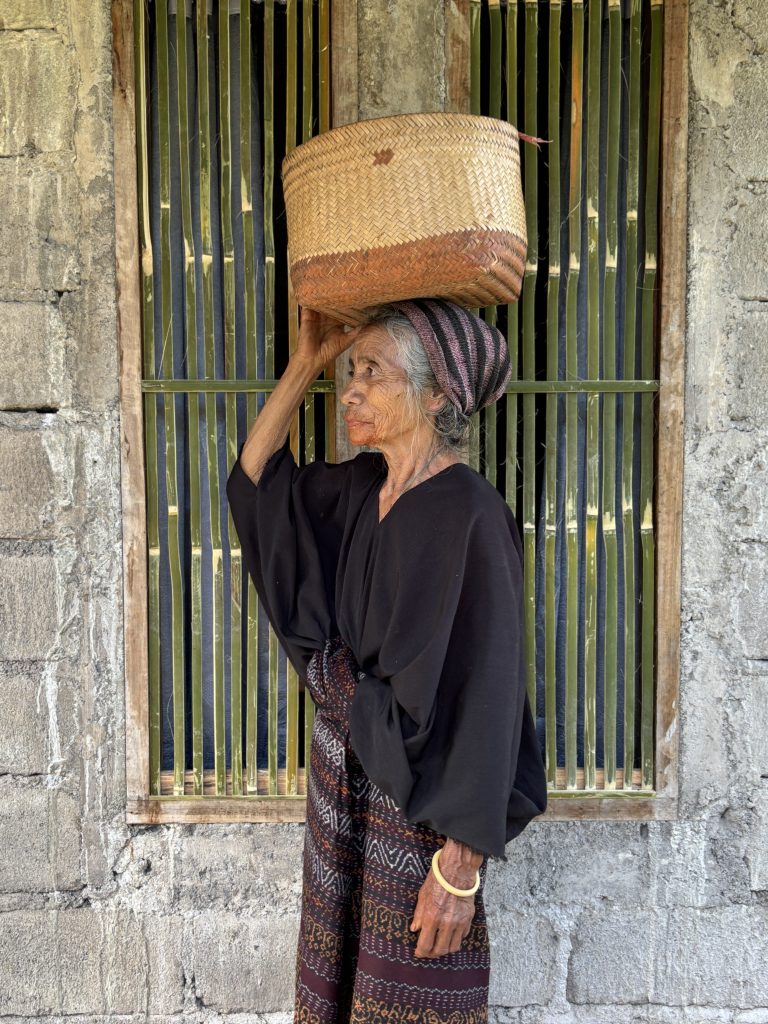
alliancemagazine.org – In the remote, mist-kissed highlands of East Nusa Tenggara, Indonesia, a profound truth unfolds. Here, Indigenous Women of Wologai gather not just to cultivate the earth through organic farming, but to safeguard a legacy. Among them, Mama Anastasia, a revered elder, imparts a timeless wisdom: ‘Miu o ana loo nebu ina mae tau, ke nene embu kita na ora pa tau.’ In essence: Do not be afraid, because your ancestors were warriors.
Indigenous Peoples and Local Communities (IPLCs) legally own 11 percent of the world’s land and over one third of the world’s intact forests lie within Indigenous Peoples’ territories. This is a testament to their long-fought advocacy, deep ecological knowledge, and generations of protecting land and sovereignty.
Despite inconsistent enforcement of these rights, there is, however, growing recognition that secure land tenure is, in and of itself, an integral pin that empowers IPLCs to continue ancestral practices that not only protect livelihoods and cultural identity but form the bedrock of efforts to combat global climate change.
With secure land rights, IPLCs nurture forests vital for carbon sequestration, use traditional methods to reduce wildfires, and actively, persistently, combat illegal logging, mining, and land-grabbing that cause deforestation. They demonstrate a holistic approach to living in harmony with nature and the ways in which deeply rooted cultural practices offer effective, sustainable solutions.
Yet, despite IPLCs being frontline defenders and dedicated caretakers of our planet’s natural resources, funders still turn their head away from these groups in favour of external and top-down interventions. The pattern is disturbing and leads us to ask: What are they afraid of?
Direct funding for IPLCs For decades, philanthropic and development efforts have channelled resources through layers of intermediaries and regional power hubs. While some do play important roles shifting funds to remote and underserviced communities, this approach too often results in a painful disconnect between funding sources and the immediate priorities of IPLCs. One that shies from basic principles long known but little actioned in funding circles.
Namely, that IPLCs are the most effective guardians of land and biodiversity, that self-determination leads to better outcomes, that supporting land rights is a moral imperative to rectify historical injustices, and that direct funding reduces bureaucracy and increases impact efficiency.
These are core beliefs now enshrined by the Ford Foundation, and they speak to our own journey shifting power. In the first year after COP26, 17 percent of Ford’s pledge-aligned funding went directly to IPLC organisations and networks. In 2023 this increased to 24 percent. Now, most recently, 51 percent of Ford’s pledge aligned funding is seen through direct support to IPLC organisations.
Yet, despite improvements, the sector still faces a glaring funding gap considering the outsized role IPLCs play in global conservation efforts. In 2021 a Rainforest Foundation Norway report revealed less than one percent of global climate funding reaches IPLCs directly, which is like equipping one portion of an army with bountiful resources but denying it to those at the front.
That’s precisely what’s happening when funding is funnelled through layers of intermediaries, where support looks and feels productive but lies far removed from those on the ground. The disparity is not just an oversight; it’s a systemic flaw that undermines the goals of climate action and sustainable development that we claim to stand by. In addition, direct funding is not reaching communities equally: around 72 percent of direct funding goes to Latin America, while only around four percent goes to Africa, 11 percent to Asia, and 13 percent to global work.
Addressing the gap While scaling up direct funding and responding to these challenges takes time, we are seeing some progress, especially among private funders. In 2023, over 27 percent of private donor funding was channelled directly to IP and LC organisations, compared to around four percent of bilateral funding, and donors are increasingly supporting emerging IP- and LC-led funds, which help to facilitate direct funding.
In addition, we can draw inspiration from other examples with the UK, Norway, Germany, the US, and the Netherlands partnering with 17 funders, including the Ford Foundation, to commit $1.7 billion for IPLC tenure rights and forest guardianship at COP26. This commitment was a significant step, acknowledging the crucial role IPLCs play. However, the challenge remains ensuring these funds reach communities directly, efficiently, and with the flexibility needed to address their self-determined priorities.
To help support this work, globally dispersed community-led funds are, however, continuing to grow and connect through platforms like Shandia. Established by the Global Alliance of Territorial Communities, this platform facilitates fund development, knowledge exchange, and collaborative advocacy to secure direct funding. Through them, IPLCs are leading a bottom-up transformation in funding mechanisms by launching their own initiatives. Here, examples like the Nusantara Fund, seeded with Ford’s and other philanthropic support, directly empower frontline communities, enabling them to secure collective tenure rights, protect forests, and advance gender equity, food security, and economic opportunities.
An unprecedented opportunity Specifically, the Nusantara Fund aims to create a $100 million endowment for IPs and LCs over the next decade, having currently reached 3.6 percent of its initial $50 million goal. Despite challenges in reporting due to climate disruptions, the fund prioritises trust-based relationships and community accountability, and centres mutual respect and collective wellbeing, rather than punitive measures or hierarchical enforcement. For us, this looks like transparent, reliable and regular channels for dialogue, proactive explanations of decision rationale and fostering a shared vocabulary, particularly for collective action and conflict resolution.
Established philanthropies, including the Ford Foundation, Thousand Currents,
Packard, and Waverley Street Foundation, are already pioneering these more equitable funding models and organisations like Native Americans in Philanthropy are advocating for direct support for tribal nations’ conservation efforts. We are marking a shift towards solidarity-based funding that recognises
IPLCs as co-designers of climate solutions, but the transition is far from done.
Indigenous Peoples and Local Communities (IPLCs) legally own 11 percent of the world’s land and over one third of the world’s intact forests lie within Indigenous Peoples’ territories.
Farah Sofa
The road ahead Sharing Indigenous knowledge, Mama Anastasia’s community in Wologai stands to demonstrate that lasting change grows from the ground up, not top down and, in support, we’re investing in flexible, multiyear funding for institutional capacity; convening and learning; and in advocating for policy change. This includes influencing philanthropic and governmental policies to prioritise direct IPLC support. We are proud to invest in inherent wisdom, proven resilience, and this paradigm shift for environmental and social change.
The question is, what is stopping you from becoming a catalyst for ground-up transformation? Our ancestors may have been warriors too, so we have no need to be afraid.
THE NUSANTARA FUND: A BLUEPRINT FOR DIRECT IMPACT
The Nusantara Fund (NF) is an Indonesian initiative offering a highly effective and ethical model of direct funding to Indigenous Peoples, Peasants, Fisherfolks, Women, and Youth. This approach is gaining global traction, challenging traditional methods that rely on intermediaries.
Structure: Formed by a strategic alliance of three major Indonesian social movements—the Indigenous Peoples Alliance of the Archipelago (AMAN), the Consortium for Agrarian Reform (KPA), and the Indonesian Forum for the Environment (WALHI)—the fund unites efforts for Indigenous rights, land reform, and environmental justice.
Vision: The NF aims to support 30 million people and protect 30 million hectares of customary and community-managed lands across Indonesia, emphasising human dignity and cultural heritage alongside nature preservation.
Finances: To date, the NF has mobilised $10.5 million in two years—halfway to its $20 million goal by 2028—and has directly regranted $1.4 million to IPLCs, funding 181 initiatives
INVESTMENT IMPACTS:
- 295,871 hectares of territory mapped for ~$160,000
- 178,832 hectares proposed for government recognition for ~$102,400
- 507,948 hectares sustainably managed (including 33,244 restored) for ~$345,600
- 136 collective enterprises supported for ~$500,000
- 11,700 people engaged through education in 89 locations for ~$396,800
- Involved 153,164 women and 52,408 young people
Sumber : alliancemagazine.org – https://www.alliancemagazine.org/blog/new-issue-on-understanding-indigenous-and-territorial-funds/

